Magnetic Lifters: safety, efficiency and control in the movement of metallic loads.
The movement of metallic loads is a critical step in several industrial processes. When carried out without the appropriate equipment, it can create risks to the safety of operators, damage to materials and loss of productivity. In this context, magnetic lifters stand out as efficient, safe and reliable solutions for handling metal parts in industrial environments.
In this article, you will understand what magnetic lifters are, how they work, what their main benefits are and why they are widely used to optimize industrial operations with a focus on safety and efficiency.
What are magnetic lifters?
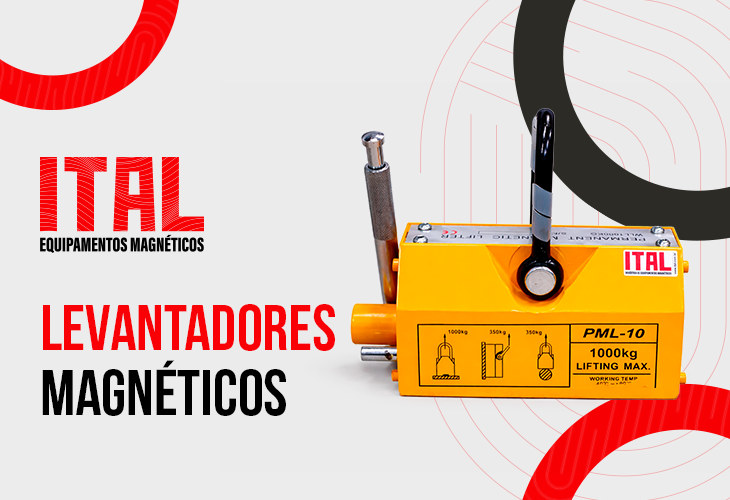
Magnetic lifters are equipment developed for lifting and moving metal loads using magnetic force. They allow you to lift, transport and position metal parts in a controlled manner, without the need for hooks, chains or complex lashings.
This type of solution is especially suitable for industrial environments that demand agility, precision and reduction of operational risks, such as production lines, storage areas and internal logistics processes.
How magnetic lifter technology works.
The operation of magnetic lifters is based on the generation of a high-power magnetic field, capable of firmly fixing the metallic load during movement. This system guarantees safe grip while the equipment is in operation, allowing stable and controlled lifting.
By deactivating the magnetic field, the part is released quickly and safely, optimizing the workflow and reducing operating time.
Operational safety when moving loads.
Safety is one of the main differentiators of magnetic lifters. By eliminating the need for manual lashings, the risk of slips, falls or lashing failures is significantly reduced.
Among the main security benefits are:
- less operator exposure to suspended loads,
- reduction of accidents during lifting,
- greater control over the positioning of parts,
- more stable and predictable operations.
These factors make magnetic lifters ideal for industrial environments that prioritize safety and compliance with operational standards.
Reduced physical effort and ergonomics.
Another relevant point is the improvement in ergonomic working conditions. The use of magnetic lifters reduces the physical effort of operators, minimizing the need for manual handling of heavy loads.
This contributes to:
- less employee fatigue,
- reduction of occupational injuries,
- increased comfort during operation,
- improving team performance.
Proper ergonomics directly impacts productivity and continuity of industrial operations.
Productivity gains in the industrial environment.
With faster and safer lifting processes, magnetic lifters provide significant productivity gains. Agility in moving loads reduces the cycle time of operations and improves the internal flow of materials.
In addition, the reduction of failures and interruptions contributes to more efficient and organized operations, especially in high-demand environments.
Main applications of magnetic lifters.
Magnetic lifters are widely used in various industrial segments, such as:
- metal and steel industries.
- boilermaking and heavy manufacturing.
- distribution and industrial logistics centers.
- production lines.
- industrial maintenance.
Its versatility allows the movement of sheets, blocks, profiles and other metal parts safely and precisely.
When choosing magnetic lifters.
Magnetic lifters are recommended whenever the operation requires:
- safe movement of metallic loads.
- agility in handling parts.
- reduced physical effort for the operator.
- greater control and stability during lifting.
increased industrial productivity.
Compared to traditional lifting methods, magnetic lifters offer more safety, efficiency and practicality.
Talk to an ITAL specialist about your application.
If this content raised a practical need, our team can indicate the best solution for your operation.